How to Keep Track of What's in Your Fridge (Without Turning It Into a Chore)
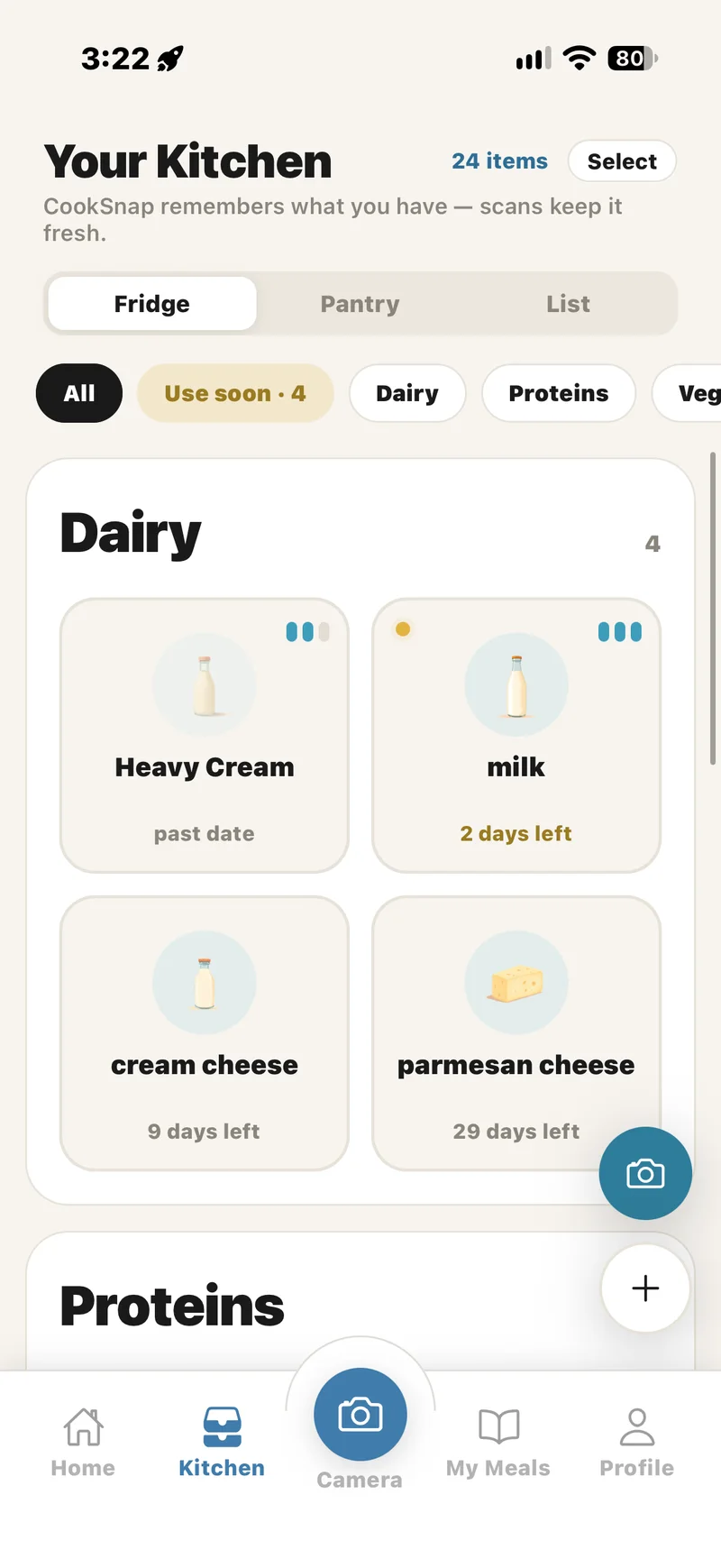
Everyone has tried some version of it: the whiteboard on the fridge door, the shared note titled “FOOD WE HAVE,” the pantry spreadsheet with an expiry column, the inventory app that wanted a barcode scan for every yogurt. And everyone's version died the same death — usually somewhere around week three.
The problem was never discipline. The problem is that every one of those systems makes youthe sync mechanism between your real fridge and its paper (or digital) twin. Skip one grocery trip's worth of data entry and the inventory is fiction. Once it's fiction, checking it is pointless, and once checking it is pointless, the system is dead.
Why fridge tracking is worth doing at all
It's tempting to write the whole idea off as organizational theater, but the payoff of knowing what you have is real:
- Less wasted food.Most household waste isn't exotic — it's the herbs, dairy, and half-used vegetables that got buried and forgotten. Knowing they exist is 80% of saving them.
- Fewer duplicate purchases. The third jar of cumin exists because nobody could see the first two at the store.
- Faster dinner decisions.“What can I make right now?” is answerable in seconds when the ingredient list is already known — that's the whole premise of searching recipes by what you have.
The three systems people try (and where each one dies)
1. The list on the door
Free, instant, and dead the first week someone unloads groceries in a hurry. Paper doesn't remind you of anything, and it certainly can't tell you the chicken expires tomorrow.
2. The spreadsheet
Great until you realize you've built yourself a part-time data entry job. Spreadsheets are where expiry dates go to be wrong: you estimate once, never update, and stop trusting the sheet the first time it lies to you.
3. The barcode-scanning inventory app
The most honest attempt, and the most work. Scanning each item on the way in is tolerable; remembering to check items out as you cook is not. Produce doesn't have barcodes, leftovers don't have barcodes, and the app's accuracy decays with every meal you cook.
The fix: make the inventory a side effect, not a task
A tracking system survives only if updating it costs nothing — if it happens insidesomething you were already doing. That's the design idea behind Custrd's Kitchen: you point your camera at the fridge because you want dinner ideas, and the scan quietly updates a digital copy of your fridge and pantry at the same time. The inventory is a byproduct of finding dinner — so it stays current without ever being a chore.
Each ingredient gets a sensible shelf-life estimate the moment it lands (days for milk, weeks for potatoes — all editable), staples like salt and olive oil can be marked “always on hand” so you never track them again, and anything running low on time surfaces in a “Use soon” view. When something is about to turn, the app doesn't just warn you — it suggests real recipes from the Custrd Library that use that exact ingredient, matched to your dietary goals. A warning is a guilt trip; a recipe is a plan.
And when you do want to add something deliberately, every fast path works: snap a photo, scan a barcode, say it out loud, or type it in.
If you'd rather stay analog
No app required for the core insight. Two habits beat every whiteboard system we've seen: keep one “eat me first” bin at eye level in the fridge and sweep anything time-sensitive into it, and before each grocery run, cook one meal exclusively from what you already own. Those two habits alone eliminate most of the waste that tracking systems promise to fix.
But if you want the tracking without the bookkeeping — that's exactly what the Kitchen is for. It's live today in the Custrd beta.