Ligurian Pasta with Basil Pesto
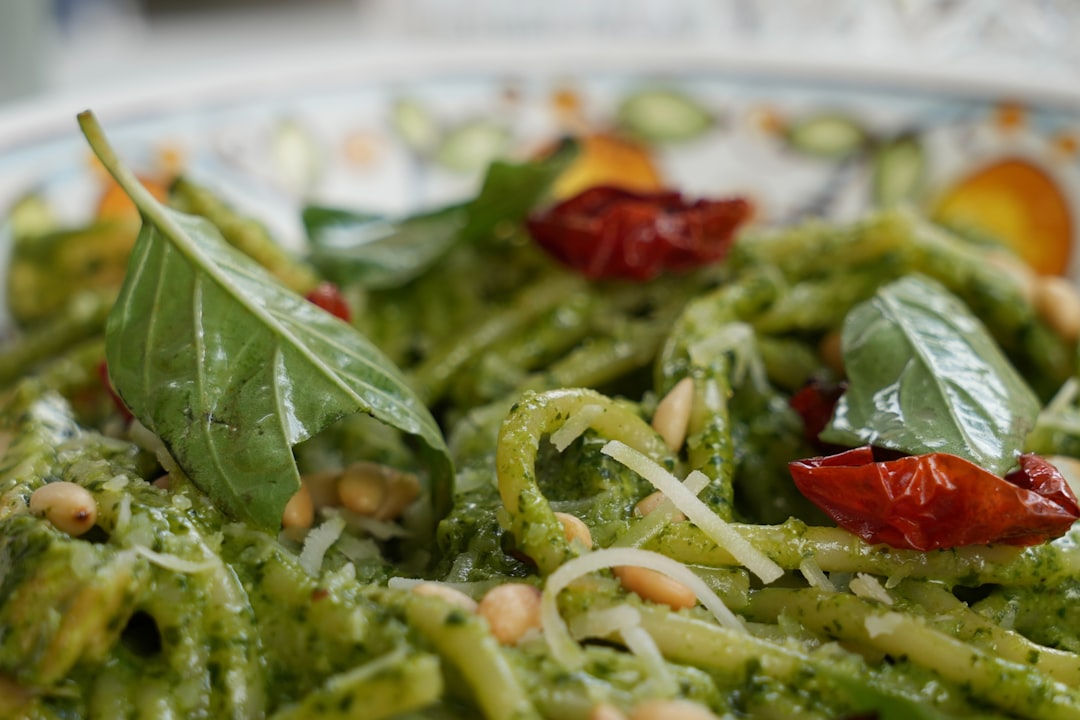
Twisty hand-rolled pasta coated in bright, herbaceous basil pesto with garlic, pine nuts, and Parmigiano-Reggiano. A Sicilian classic that celebrates simple ingredients and traditional pasta-making craft.
- Total time
- 45 min
- Servings
- 4
- Calories
- 580
- Protein
- 22g
Ingredients
15 items — tap to check off
Missing one? Custrd suggests a swap that works.
Open the appInstructions
Step 1
Place 2 cups of fresh basil leaves (gently packed, stems removed), 3 peeled garlic cloves, and 0.5 cup of toasted pine nuts into a food processor. Pulse until you have a coarse paste — do not overprocess or the basil will turn dark and bitter. You want texture, not a smooth puree.
Step 2
With the processor running, slowly drizzle in 0.75 cup of extra-virgin olive oil in a thin stream. Stop occasionally to scrape down the sides with a spatula. The mixture should be vibrant green and creamy.
Step 3
Transfer the pesto to a large mixing bowl. Fold in 1 cup of finely grated Parmigiano-Reggiano and 0.25 cup of finely grated Pecorino Romano using a rubber spatula. Season with 0.5 teaspoon of sea salt and 0.25 teaspoon of freshly ground black pepper. Taste and adjust seasoning if needed. Set aside.
Step 4
Mound 2 cups of flour on a clean work surface or wooden board. Using your fingers, create a deep well in the center — it should look like a volcano. This creates a basin for your water.
Step 5
Pour 0.75 cup of warm water and 0.5 teaspoon of sea salt into the well. Using a fork, gently beat the water and salt together, then begin pulling flour from the inner walls of the well into the liquid. Work slowly and carefully — if the wall breaks, use your hands to patch it with a pinch of flour.
Step 6
Once the dough becomes shaggy and difficult to work with a fork, use your hands to bring all the flour together into a rough ball. Dust away excess flour and knead the dough on a clean surface for 8-10 minutes. It should be smooth, elastic, and slightly tacky but not sticky — if it's too wet, dust with a little flour; if it's too dry, wet your hands slightly and continue kneading.
Step 7
Shape the dough into a ball, wrap it tightly in plastic wrap, and let it rest at room temperature for 20 minutes. This relaxes the gluten and makes the dough easier to shape.
Step 8
After resting, unwrap the dough and place it on a lightly floured surface. Tear off a piece about the size of a cherry, then roll it between your palms and the work surface into a rope about 3 inches long and the thickness of a thin pencil.
Step 9
Place one rope on the work surface and, using your index and middle fingers, roll it toward you with a slight twisting motion — apply gentle pressure so the rope curls into a tight spiral. The finished trofie should look like a small twisted screw, about 2 inches long. Transfer to a lightly floured plate and repeat with the remaining dough. You should have about 60-70 pieces.
Step 10
Fill a large pot with 4 quarts of water and bring it to a boil over high heat. Add 2 tablespoons of kosher salt — the water should taste like the sea. Once boiling, carefully add the trofie in batches to avoid crowding, stirring gently to prevent sticking.
Step 11
Cook for 4-6 minutes, stirring occasionally. The trofie will float to the surface when they're close to done. Taste one at 4 minutes — it should be tender but still have a slight firmness (al dente). Fresh pasta cooks much faster than dried.
Step 12
Reserve 1 cup of pasta cooking water, then drain the trofie gently in a colander without shaking — the water clinging to the pasta helps loosen the pesto. Transfer the warm trofie to the bowl with pesto.
Step 13
Toss the trofie gently with the pesto using a rubber spatula, adding 2-3 tablespoons of reserved pasta water to loosen the sauce. The pesto should coat each piece and be creamy, not stiff. Add more pasta water if needed — a little starch from the pasta water helps the sauce cling.
Step 14
Divide the trofie among four warm bowls. Drizzle 1 tablespoon of extra-virgin olive oil over the pasta, scatter 0.25 cup of fresh basil leaves across the top, and finish with 2 ounces of Parmigiano-Reggiano shavings. Serve immediately while the pasta is still hot.
Tools you’ll need
- food processor
- rubber spatula
- large mixing bowl
- wooden work surface or pasta board
- fork
- plastic wrap
- large pot
- colander
- measuring cups and spoons
- kitchen scale (optional)
Cook smarter
Get matched recipes for what’s in your fridge
Custrd is an iPhone and Android app that finds real recipes from the ingredients you already have. No more grocery-list aspirations. Try it free for 7 days.