Beijing Zha Jiang Noodles
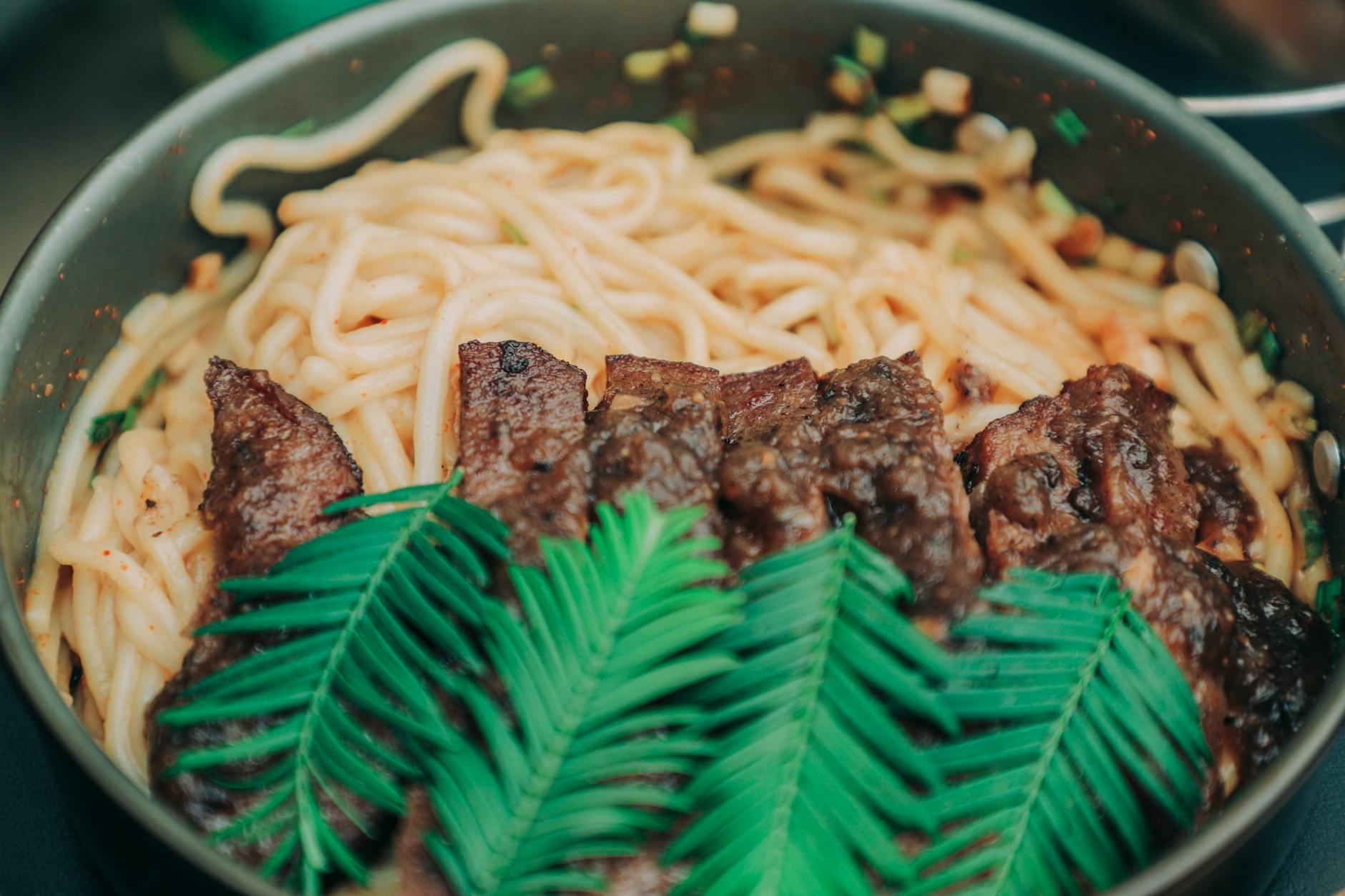
Savory-sweet Beijing noodles tossed with a rich, spiced pork sauce thickened with fermented bean paste. A beloved street food that comes together in under 30 minutes with authentic, layered flavor.
- Total time
- 25 min
- Servings
- 2
- Calories
- 650
- Protein
- 28g
Ingredients
16 items — tap to check off
Missing one? Custrd suggests a swap that works.
Open the appInstructions
Step 1
Peel and finely mince 3 garlic cloves. Grate a 0.5-inch piece of fresh ginger on a microplane — you want about 1 teaspoon of minced ginger. Set both aside.
Step 2
Cut half an English cucumber lengthwise into quarters, then cut each spear into 2-inch matchsticks. Place in a small serving bowl.
Step 3
Slice 2 green onions at an angle into 1-inch pieces, separating white parts from green parts. Keep them in two piles.
Step 4
Roughly chop 0.25 cup roasted unsalted peanuts — you want irregular pieces, not a fine powder. Set aside.
Step 5
Set a 10-inch skillet over medium-high heat. Add 2 tablespoons of vegetable oil and let it heat for 1 minute until it shimmers. Add the minced garlic and grated ginger, stirring constantly for 30 seconds until fragrant — you'll smell the sharp, aromatic notes rise up.
Step 6
Add 6 ounces of ground pork, breaking it into small, irregular pieces with a wooden spoon as it hits the pan. Cook for 3-4 minutes, stirring frequently, until the pork is mostly no longer pink and starting to brown at the edges. You want some caramelization, not just cooked-through meat.
Step 7
Stir in 3 tablespoons of spicy bean paste (doubanjiang), coating all the pork evenly. Add 2 star anise pods and cook for 1 minute, stirring gently, until the bean paste darkens slightly and coats the mixture.
Step 8
Pour in 0.5 cup of water or chicken stock, 1 tablespoon of low-sodium soy sauce, 0.5 tablespoon of rice vinegar, and 0.5 teaspoon of granulated sugar. Stir to combine, scraping the bottom of the skillet to loosen any browned bits.
Step 9
Reduce the heat to medium-low and simmer uncovered for 8-10 minutes, stirring occasionally. The sauce should thicken enough that it coats the back of a spoon and doesn't run immediately when you tilt it — this is when the starches in the bean paste fully hydrate. Remove from heat and stir in 0.5 tablespoon of sesame oil. Taste and adjust seasoning with a pinch more soy sauce if needed.
Step 10
While the sauce simmers, bring a large pot of salted water to a rolling boil over high heat. Add 8 ounces of fresh Chinese egg noodles or ramen and stir with a wooden spoon to separate them. Cook for 3-4 minutes, or according to package directions, until just tender but still with a slight bite — the noodles will soften slightly more from the residual heat.
Step 11
Drain the noodles in a colander, shaking gently to remove excess water. Divide between two serving bowls.
Step 12
Spoon the zha jiang sauce — including the pork and star anise — generously over each bowl of noodles. Top each with a handful of cucumber matchsticks, the white parts of the sliced green onions, a scatter of roasted peanuts, the green parts of the green onions, and fresh cilantro. Toss at the table, mixing the noodles with the sauce until everything is coated. Eat immediately while the noodles are warm.
Tools you’ll need
- 10-inch skillet
- wooden spoon
- large pot
- colander
- microplane
- small serving bowl
- two serving bowls
Cook smarter
Get matched recipes for what’s in your fridge
Custrd is an iPhone and Android app that finds real recipes from the ingredients you already have. No more grocery-list aspirations. Try it free for 7 days.